Vitalik’s Single-Slot Finality Push Puts Ethereum Roadmap in Focus
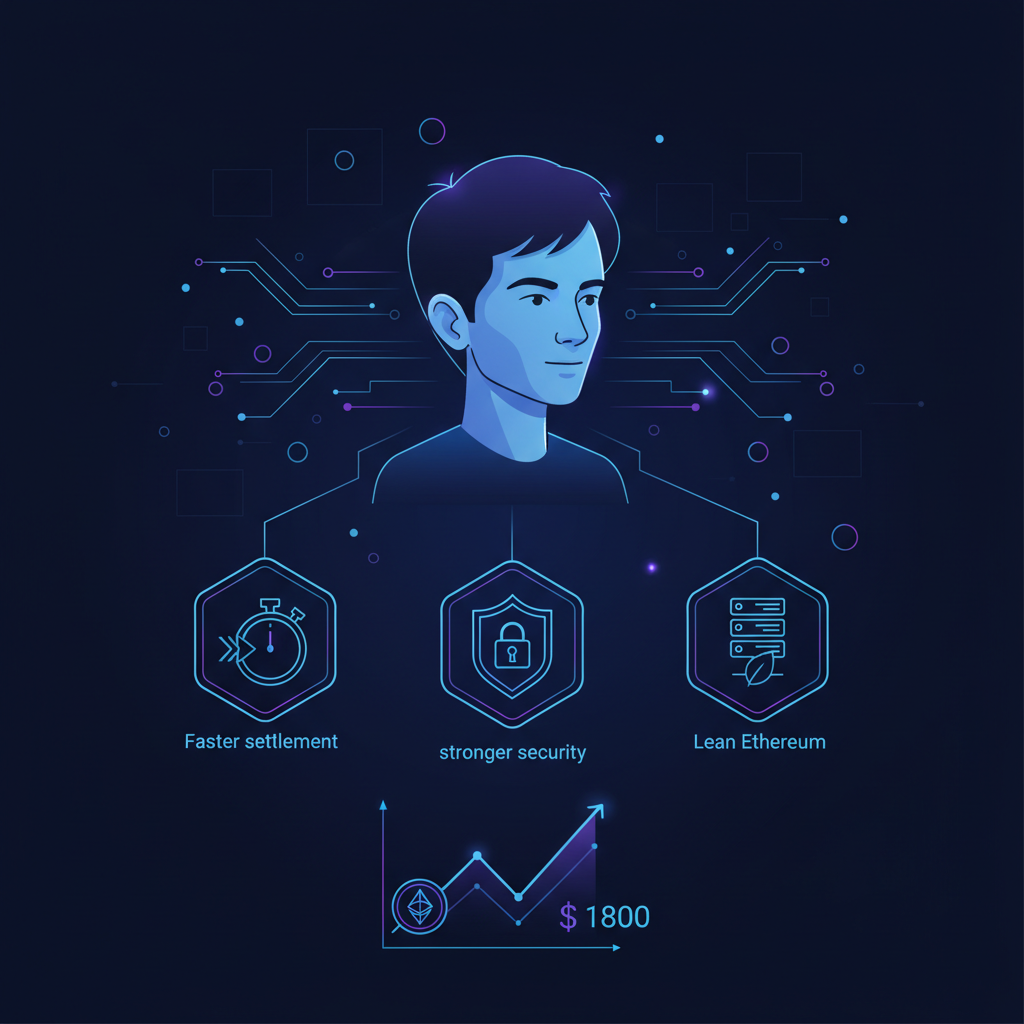
Ethereum’s core roadmap is back at the center of the market narrative after Vitalik Buterin outlined a push toward single-slot finality The contrast is sharp: price is subdued and traders are cautious, but protocol work is clearly active and pointed at faster settlement, stronger security, and a leaner core design. As a result, Vitalik’s latest finality push is not just a technical curiosity. It is a medium-term story that could matter for valuation as markets start to reprice Ethereum’s post-merge trajectory. Today, Ethereum’s proof-of-stake consensus finalizes blocks through an epoch-based mechanism often referred to as Gasper. Users typically see their transactions included in a few seconds, but full finality, the point at which a transaction is economically irreversible under the protocol, can take on the order of 12 to 15 minutes. Single-slot finality, as described in Vitalik’s recent work and follow-up coverage, aims to collapse that gap by making block proposal and finalization occur in the same slot. In practical terms, that would mean: Vitalik’s blog work on “epochs and slots all the way down” and subsequent summaries emphasize that this single-slot design borrows from Tendermint-style consensus, where one block is finalized before the next is built, leading to cleaner confirmation semantics for users. The design challenge is nontrivial. Single-slot finality has to balance: Vitalik’s latest proposal does not promise an overnight switch. Instead, it sketches a concrete target and a path for core researchers and client teams to iterate toward a single-slot regime that can be implemented without compromising Ethereum’s decentralization goals. The single-slot finality push lands inside a broader post-merge roadmap that has increasingly been described under the “Lean Ethereum” banner. Recent commentary from research channels and exchange desks highlights a multi-year redesign focused on making Ethereum simpler at the protocol level, while raising its capability through better state designs, improved consensus, and more modular verification. Several planned upgrades intersect directly with Vitalik’s finality vision: These upgrades are explicitly framed as multi-year, with implementation spread across several hard forks rather than one monolithic release. What matters for markets today is that the direction is consistent: faster, clearer finality, more scalable execution, and a leaner, more formally verifiable base layer. Against this roadmap narrative, price action remains muted. The latest ETH chart shows spot trading around 1,795 dollars, marginally red on the day and locked in a relatively tight range that has characterized recent weeks. Crypto-wide risk appetite is limited, as reflected by a Fear and Greed Index reading of 26, which signals cautious positioning and an elevated preference for short-term hedging over long-term accumulation. Recent market analysis has characterized Ethereum’s current state as a fragile equilibrium: In that context, Vitalik’s single-slot finality blueprint offers something markets care about: a concrete, technically credible upgrade story with tangible user experience implications. It is not a meme narrative and not simply a price call. It is structural, which is precisely the sort of story that can anchor medium-term bullish theses when spot is stuck in a range. From a technical analysis perspective, the ETH chart around 1,800 dollars has been defined by recurring tests of support and lower-high structures that reflect an indecisive market. While exact levels vary by venue and charting tools, several themes tend to show up across major exchanges and analytics platforms: Where does single-slot finality fit into this picture? None of this guarantees an immediate breakout. However, it does mean that if risk sentiment improves, traders will have more than just "it is cheap" or "L2s are growing" as a narrative prop. They can point to a path toward materially better user experience on the base chain. Vitalik’s finality focus is tightly coupled with his broader "Lean Ethereum" and rollup-centric vision. That vision assumes: Single-slot finality is a crucial ingredient for that future. A rollup-centric Ethereum still needs a strong, fast settlement layer, because: The Hong Kong Web3 Carnival appearance earlier in the year, where Vitalik framed Ethereum’s next five years around faster finality, ZK-EVM, privacy, and quantum resistance, now reads less like a high-level sketch and more like a roadmap that is being actively operationalized through concrete proposals like single-slot finality. With sentiment in Fear and ETH trading close to the lower half of its recent range, traders and long-term holders are looking for signals that justify patience. Vitalik’s single-slot finality push sends several such signals: That does not remove macro risks or ETF-related headwinds, but it can counterbalance them by reinforcing the idea that the network’s structural trajectory remains bullish even as spot price action stays range-bound. Single-slot finality is a proposed upgrade where Ethereum blocks would be proposed and finalized in the same slot, around 12 seconds. Instead of waiting many minutes for full economic finality, users would get a clear, protocol-level settlement guarantee in one short time window. It mainly makes settlement faster and clearer. Transactions are already included quickly, but single-slot finality would reduce the wait time for high-confidence settlement, which is important for large transfers, DeFi positions, and cross-chain bridges. Everyday users benefit from simpler, more predictable confirmation semantics. Single-slot finality strengthens Ethereum’s role as a settlement layer for rollups. By making L1 finality faster and more robust, it reduces risk for rollups posting data and state roots on-chain, and supports higher aggregate throughput as danksharding and ZK-EVM technologies mature. No. Vitalik’s roadmap discussions make clear that single-slot finality is part of a multi-year process. It requires consensus changes, client updates, and extensive testing. Traders should view it as a medium to long-term structural catalyst, not an imminent flip of a switch. In the near term, price remains driven by macro conditions, ETF flows, and broader crypto risk appetite. Over time, credible upgrades like single-slot finality can support higher valuations by improving Ethereum’s utility and strengthening its position as a secure settlement network. For traders and long-term holders tracking this story, several checkpoints are worth monitoring: As the technical picture becomes clearer, the ETH chart and technical analysis will increasingly have to account for not just macro and ETF flows, but the tangible improvements being baked into Ethereum’s core protocol. Disclaimer: This article is for informational purposes only and does not constitute financial, investment, or trading advice. Always conduct your own research and consider your risk tolerance before making investment decisions.What Single-Slot Finality Actually Means
Lean Ethereum, Glamsterdam, Hegotá: Roadmap Comes Into Focus
Market Backdrop: ETH In A Range, Sentiment In Fear
ETH Chart And Technical Analysis: How Traders Might Price Finality
Factor Current State Single-Slot Finality Impact Settlement time Economic finality around 12-15 minutes Target around 12 seconds for finality per slot User experience Inclusion is fast, finality is slower and nuanced Clear, near-instant finality semantics Security perception Robust but complex epoch-based model Simpler, more direct finality model with clear slashing and safety DeFi and high-value transfers Often rely on multiple confirmations or off-chain assumptions Stronger on-chain guarantees with shorter waiting windows Lean Ethereum, Rollups, And The Path To High TPS
Why This Matters In A Fearful Market
FAQ: Vitalik’s Single-Slot Finality And The ETH Market
What is single-slot finality in simple terms?
Does single-slot finality make Ethereum faster for everyday users?
How does this proposal fit with rollups and Layer 2 scaling?
Will this upgrade happen quickly?
What does this mean for ETH’s price right now?
What To Watch Next
This article is for informational purposes only and is not financial advice. Links marked “Sponsored” are affiliate/referral links.