Staking Pool vs Solo Validator: Which Ethereum Staking Method Fits You?
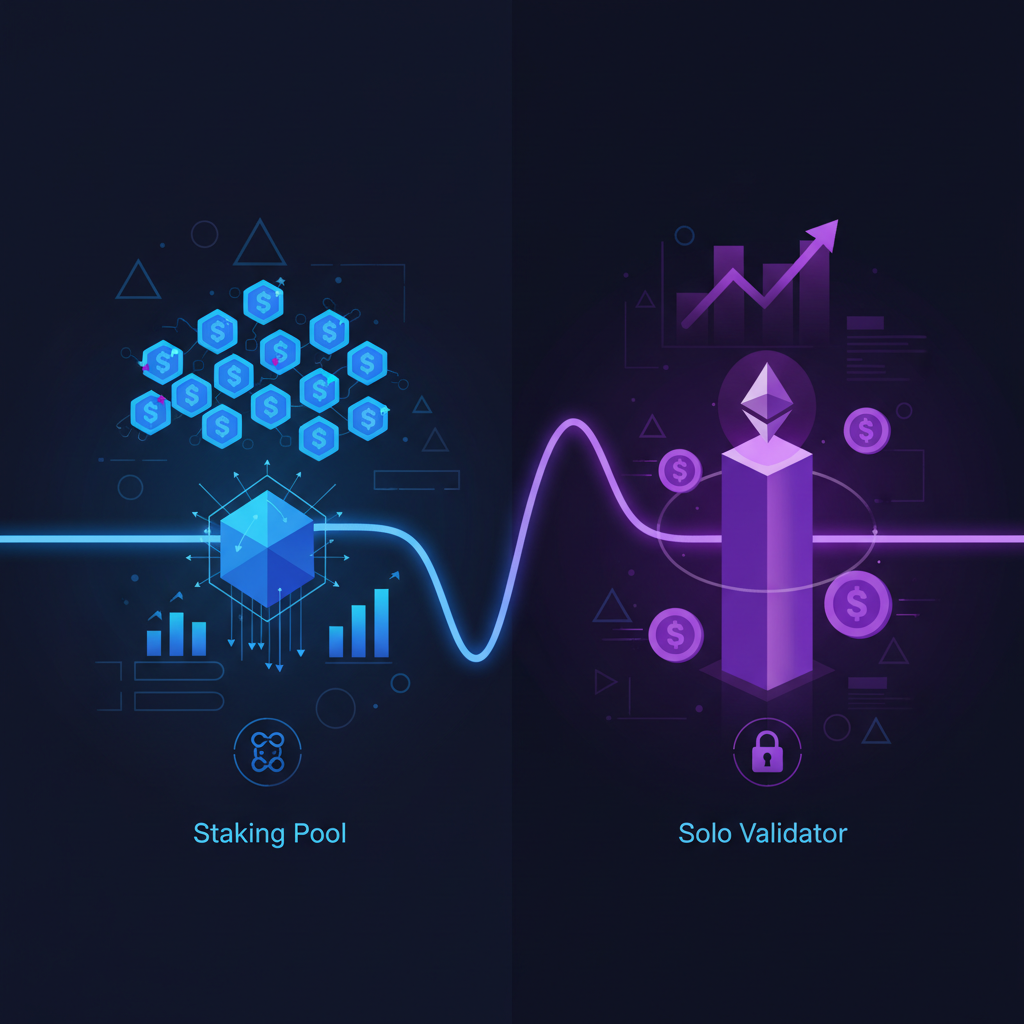
Ethereum staking has become a cornerstone of passive income in crypto, but the method you choose can dramatically affect your returns, control, and peace of mind. With ETH trading at $1,911, up 2.31% in the last 24 hours, and the Crypto Fear and Greed Index sitting at 25 (Extreme Fear), investors are weighing their options carefully in uncertain conditions. The core decision: join a staking pool or run a solo validator.
This guide breaks down both approaches with current costs, realistic rewards, and practical trade-offs to help you decide which path aligns with your technical skills, capital, and risk tolerance.
What Is Ethereum Staking?
Ethereum transitioned to proof-of-stake in September 2022, replacing energy-intensive mining with staking. Validators propose and attest to blocks, securing the network and earning rewards in return. To participate, you must lock up ETH as collateral, which can be slashed if you act maliciously or go offline.
The network requires exactly 32 ETH to run a solo validator. At current prices, that's approximately $61,152, a significant barrier for many investors. This is where staking pools enter the picture, allowing fractional participation with far lower minimums.
Solo Validator: Full Control, Full Responsibility
Running a solo validator means you operate your own node, either on dedicated hardware or a cloud server. You retain complete custody of your keys and earn the full staking reward without middleman fees.
Requirements and Costs
- Capital: 32 ETH minimum (~$61,152 at $1,911/ETH)
- Hardware: ~$1,000-$2,500 for a dedicated machine (Intel NUC or equivalent), or ~$50-$200/month for cloud hosting
- Internet: Stable broadband with 99.9%+ uptime; penalties accrue after brief outages
- Technical skill: Linux command line, networking, and ongoing maintenance
Pros of Solo Validation
- Maximum rewards: No pool fees eating into returns
- Complete decentralization: You strengthen network resilience directly
- Custody control: Your keys, your ETH, no counterparty risk
- MEV extraction: Full access to maximal extractable value through priority fees
Cons of Solo Validation
- High capital barrier: 32 ETH excludes most retail participants
- Operational risk: Slashing penalties for downtime or misconfiguration
- Illiquidity: ETH remains locked until withdrawal; no exit queue guarantee
- Time commitment: Monitoring, updates, and troubleshooting required
According to Beaconcha.in data, solo validators currently earn approximately 3.5-4% APR, though this fluctuates with network participation and MEV opportunities.
Staking Pool: Accessibility with Trade-offs
A staking pool aggregates ETH from multiple participants to run validators collectively. You contribute any amount, typically as little as 0.01 ETH, and receive a tokenized representation of your stake that often trades on secondary markets.
Types of Staking Pools
| Pool Type | Examples | Key Feature |
|---|---|---|
| Liquid staking protocols | Lido (stETH), Rocket Pool (rETH), Coinbase (cbETH) | Receive liquid derivative tokens |
| Centralized exchanges | Binance, Kraken, Coinbase | Simplest UX, highest custody risk |
| Decentralized pools | Rocket Pool, StakeWise | Permissionless node operators |
Pros of Staking Pools
- Low minimum: Start with fractions of an ETH
- Liquidity: stETH and similar tokens trade on DEXs, enabling DeFi composability
- No hardware: Zero technical setup or maintenance
- Diversification: Exposure spread across multiple validators
Cons of Staking Pools
- Fee drag: 10-25% of rewards taken as protocol or operator fees
- Smart contract risk: Bugs or exploits can drain pooled funds
- Centralization concerns: Lido alone controls over 28% of staked ETH, raising network health questions
- Depeg risk: Derivative tokens can trade below ETH value during market stress
Pool yields typically range from 2.8-3.5% APR after fees, with liquid staking tokens often carrying additional yield opportunities in DeFi protocols.
Head-to-Head Comparison
| Factor | Solo Validator | Staking Pool |
|---|---|---|
| Minimum stake | 32 ETH (~$61,152) | 0.01-0.1 ETH (~$19-$191) |
| Technical requirement | High (Linux, networking) | None |
| Custody | Self-custody | Protocol or exchange custody |
| Net APR (typical) | 3.5-4% | 2.8-3.5% |
| Liquidity | Locked, withdrawal queue | Liquid tokens available |
| Uptime risk | Personal responsibility | Pool operator manages |
| Slashing risk | Direct exposure | Socialized across pool |
Current Market Context: Why This Matters Now
With ETH at $1,911 and the market in Extreme Fear territory, staking decisions carry extra weight. The 2.31% daily bounce suggests some bottoming sentiment, but volatility remains elevated. In this environment:
- Solo validators face opportunity cost: locked ETH cannot capture sudden price swings
- Staking pool participants with liquid tokens can exit positions faster, though potentially at a discount
Recent discussions on Ethereum forums and Twitter highlight renewed interest in decentralized alternatives to dominant pools, particularly Rocket Pool's minipool system, which allows node operators to participate with just 8 ETH plus RPL collateral. This hybrid approach splits the difference between pure solo and pure pooled staking.
FAQ: Common Questions About Ethereum Staking
Can I switch from a staking pool to solo validation later?
Yes, but it requires exiting your pool position, withdrawing ETH, and then depositing 32 ETH to launch a validator. Tax implications and withdrawal queue delays apply. Plan this as a deliberate transition, not a quick switch.
What happens if my solo validator goes offline?
Small penalties accrue for missed attestations. Extended downtime, particularly during your assigned block proposal duties, causes larger penalties. However, slashing, the severe punishment, only occurs for double-signing or other provably malicious acts. Proper setup with failover systems minimizes risk.
Are staking pool tokens safe to hold long-term?
They carry smart contract and counterparty risks. Lido's stETH has operated since 2020 without major incidents, but no protocol is immune. Diversifying across pools and keeping some exposure in self-custodied ETH reduces concentration risk.
How do taxes work for staking rewards?
Most jurisdictions treat staking rewards as income at fair market value when received. Solo validators recognize income continuously; pool participants typically recognize when claiming or trading derivative tokens. Consult a tax professional for your specific situation.
Is solo staking worth it for the extra yield?
At current rates, the 0.5-1% APR advantage on 32 ETH equals roughly $300-$600 annually before hardware and time costs. For many, the simplicity of pools outweighs this marginal gain. Solo validation makes sense primarily for ideological commitment to decentralization or for operators running multiple validators at scale.
What to Watch Next
Several developments could shift the staking landscape in coming months:
- Pectra upgrade: Ethereum's next major update may include validator improvements and potentially higher staking limits per validator
- Pool competition: New entrants like ether.fi and Puffer Finance are challenging incumbents with restaking narratives and lower fees
- Regulatory clarity: SEC actions against staking services could reshape which pools remain accessible to U.S. participants
- ETH price action: A sustained recovery toward $2,500+ would make the 32 ETH barrier even more prohibitive, likely accelerating pool adoption
Monitor Beaconcha.in and EthStaker community channels for real-time network health and emerging pool options.
Bottom Line: Choose Your Trade-off
Neither staking pool nor solo validator is universally superior. Your optimal path depends on capital, technical comfort, time availability, and values around decentralization. With ETH near $1,900 and market fear pervasive, the priority is matching your staking method to your actual circumstances, not an idealized version of them.
Start small with a pool if you're uncertain. Graduate to solo validation only when the capital, skills, and commitment align. The Ethereum network benefits from both participants: pools democratize access, while solo validators preserve the decentralization that makes the protocol valuable.
Disclaimer: This article is for informational purposes only and does not constitute financial, legal, or tax advice. Cryptocurrency investments carry substantial risk of loss. Staking involves technical and financial risks including slashing, smart contract exploits, and illiquidity. Consult qualified professionals before making investment decisions. Past performance does not guarantee future results.
This article is for informational purposes only and is not financial advice. Links marked “Sponsored” are affiliate/referral links.